
Multnomah County City Directory Holdings
Portland supplies the strongest historical city directory trail in Multnomah County. The first Portland volume was issued by the S. J. McCormick company in 1863, and Portland City Archives describes its directory holdings as running through 1986. The Multnomah County Library guide explains how to use the volumes for names and addresses. These are historical publications, not a current roll, and their coverage follows the city and the publisher rather than the whole county.
The table separates a full collection from a search feature within those books. It also distinguishes a catalog from a directory volume. That distinction matters when a search produces a map, photograph, or municipal file that helps explain an address but does not itself list a household.
| Collection | Years | Where Held | Access |
|---|---|---|---|
| Portland city directories | 1863-1986 | Portland City Archives and Library guide | Archives appointment; guide online |
| S. J. McCormick Portland directories | 1863-1881 | Cataloged Portland historical run | Use the historical collection |
| R. L. Polk Portland titles | 1882-1928 | Cataloged Portland historical run | Use the historical collection |
| Street and Avenue Guide | 1930 forward | Later Portland directory volumes | Reverse address research |
| Genealogical Forum directories | 1887-1985 | Genealogical Forum of Oregon | On-site or lookup service |
Catalog evidence identifies Polk titles through the later twentieth century, but the accessible source does not provide a complete shelf list for each year. When one missing year matters, ask the archive or collection staff about that particular volume instead of assuming the run is continuous.
Portland City Directory Years and Publishers
The Portland sequence has a useful publishing history. County Library catalog evidence identifies The Portland Directory under S. J. McCormick for 1863-1881, then R. L. Polk's Portland City Directory for 1882-1909, followed by Polk's Portland City Directory for 1910-1928. Later Polk and Portland titles continue into the 1980s, while the Archives gives the verified collection endpoint of 1986.
Multnomah County Library's Portland city-directory guide illustrates the name and reverse-address method used in the volumes.
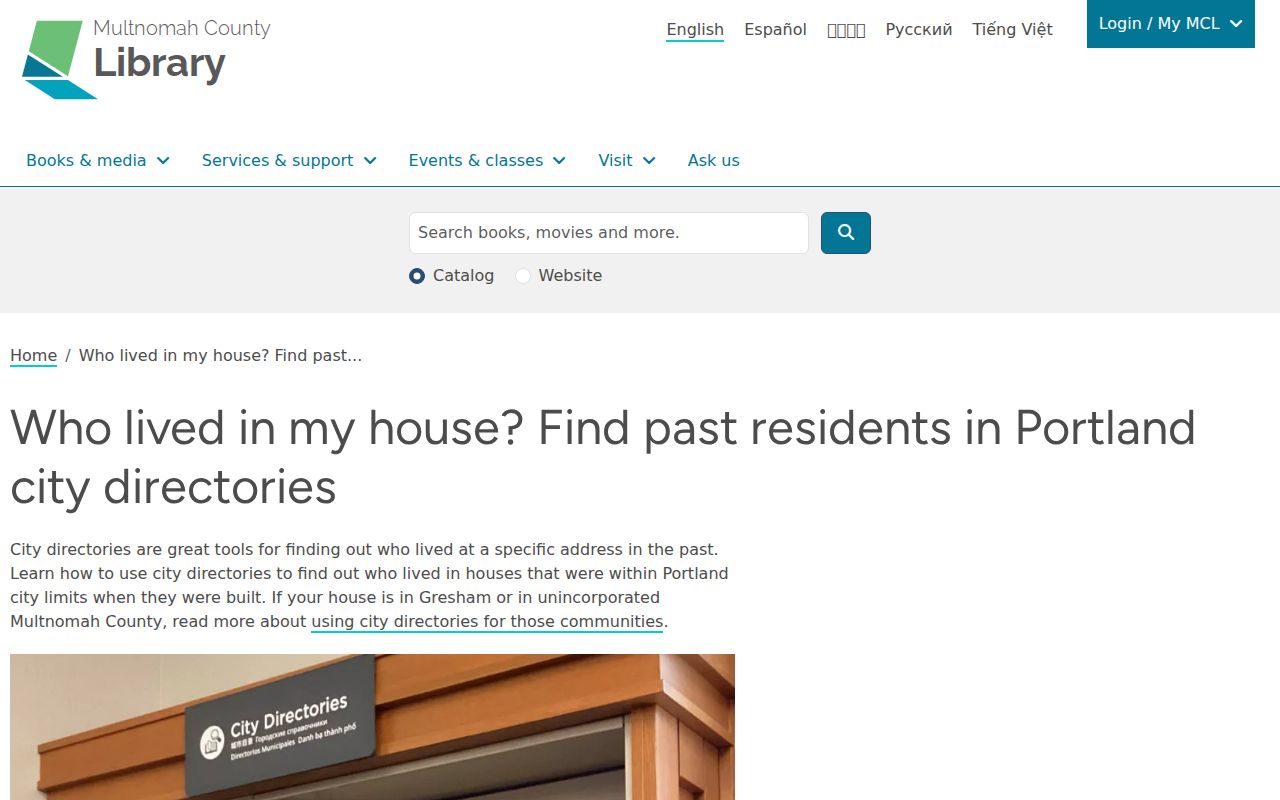
The Multnomah County city directory guide is a useful starting point because it shows how an address clue leads to a printed name entry, rather than treating a directory as a complete resident list.
| 1863 | First documented Portland directory, issued by S. J. McCormick. |
|---|---|
| 1882 | R. L. Polk directory title begins in the catalog history. |
| 1910 | Polk's Portland City Directory appears in the catalog history. |
| 1930 | Later books add the Street and Avenue Guide for reverse address use. |
| 1986 | Last year in Portland City Archives' stated directory holding range. |
Note: A publication title identifies a volume sequence, but the date printed on that volume remains the date of the listing.
Multnomah County City Directory Access
Use the collection that matches the record and the place. Portland City Archives holds the 1863-1986 directory set and uses Efiles as its online catalog. An appointment is the route for the full physical collection; some Efiles results include downloadable images, maps, or documents. The Archives also offers email contact and research appointments for material that has not been digitized.
Portland City Archives describes its holdings and visit process for the historical collection.
The archive image represents the in-person route for Multnomah County city directory volumes when the online catalog does not contain the needed book or page.
At all Multnomah County Library locations, Ancestry Library Edition is available for census, passenger, vital, military, and family-history collections, but it has no remote access. The Genealogical Forum of Oregon research service is another documented channel for Portland directories, marriage indexes, obituaries, and microfilm. Its volunteer lookup and copy service is priced by half hour, with a 30-minute minimum; confirm current access details before a visit.
Multnomah County Library's Ancestry Library Edition resource explains the at-library access condition.
The Multnomah County city directory trail becomes stronger when a directory year is paired with a census or other dated family-history source available at the library.
Reading Multnomah County City Directory Entries
A name entry is compact and must be read as a publisher's notation. The illustrated 1938 Portland example groups individuals and businesses alphabetically. It can provide a listed person's name, home address, trade or company connection, and sometimes a company name. A spouse's first name may be shown in parentheses. Adult children and live-in domestic workers can appear as separate listings, while a widow's entry can retain a deceased spouse's name in parentheses.
Later reverse listings arrange addresses by street, block, and number. They usually give an abbreviated person or business at that address. Take that exact spelling, initials, and punctuation back to the alphabetical portion before drawing any conclusion. The evidence supports a directory-year listing, not a complete household or a certified current address.
| Name line | Alphabetical listing of an individual or business. |
|---|---|
| Home address | Address shown in the name entry when the publication provides it. |
| Trade or company | Business affiliation or occupation clue in the alphabetical line. |
| Parenthetical name | May identify a spouse or a deceased spouse in a widow listing. |
| Reverse listing | Abbreviated person or business at a street, block, and number. |
- Street and Avenue Guide
- The reverse address section in Portland city directories from 1930 forward.
- Householder listing
- A listing convention that often centers one household member instead of naming every person present.
- Abbreviation
- Short printed wording in the reverse listing that should be checked against the alphabetical entry.
Pink and Green Address Guides
The practical shortcut in a 1930-forward Portland volume is the Street and Avenue Guide, often printed on pink or green paper. Start with the street name, move to the block, then locate the number. The abbreviated occupant or business name found there becomes the search term for the alphabetical section, where fuller details may appear. This is an address-to-name technique, not a claim that the person was the only resident there.
The same approach has limits. The reverse section begins only in the later period, and the directory footprint may not match a modern Multnomah County address. A Gresham, rural-route, or unincorporated location can call for a different directory family or a county tax-lot and legal-description check before a Portland volume is used.
Note: Copy the directory's printed street form before translating it into a current address format.
Pre-1930 Multnomah County City Directories
Directories dated 1863-1929 do not include an address-arranged reverse section. The Library's documented method is to identify a name in a later directory, search that name in earlier alphabetical volumes, and test municipal plumbing or sewer permits when the address history needs support. That sequence is slower, but it respects what the earlier books actually indexed.
For Portland properties, compare the historic address with permit research through the City. More complete permit material follows Portland Permitting & Development guidance or a defined City public-records request. City archival material already held by Portland Archives and Records Center should be sought through Efiles, email, or an appointment rather than a duplicate request.
Portland Archives Efiles is the online catalog for City archival material and some digital objects.
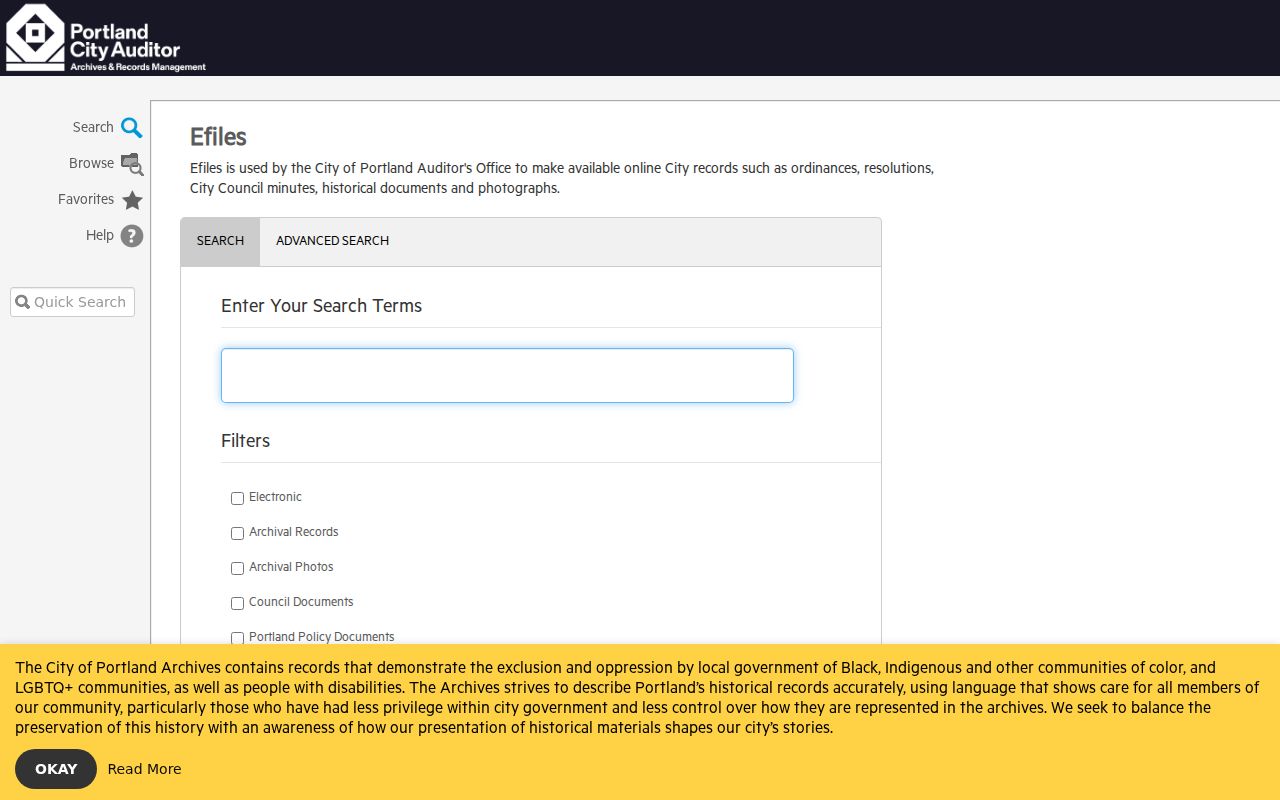
The Efiles image points to a catalog route that can add maps, municipal files, and scanned materials to a Multnomah County city directory search.
Multnomah County City Directory Address Changes
Portland's address-system revisions make the early 1930s a special case. For 1930 and 1931, the Library recommends the old address. For 1932 and 1933, test both old and new forms because the changes occurred at different times across neighborhoods. Official Ordinance 61325's 1933 report cross-references former and revised street and house forms, making it a useful bridge between a historic directory and a present-day map.
The address issue is broader than one old book. Portland's 1890/91 and 1931-33 naming and numbering changes, plus later readdressing in the South Portland sextant, mean a modern street number cannot be dropped unchanged into every historic source. Use the address era first, then municipal boundary, then the appropriate directory family or tax-lot record.
Oregon Historical Society's house and building history guide identifies address-arranged historic-resource material, Block Book, atlases, and maps that can help make that bridge.
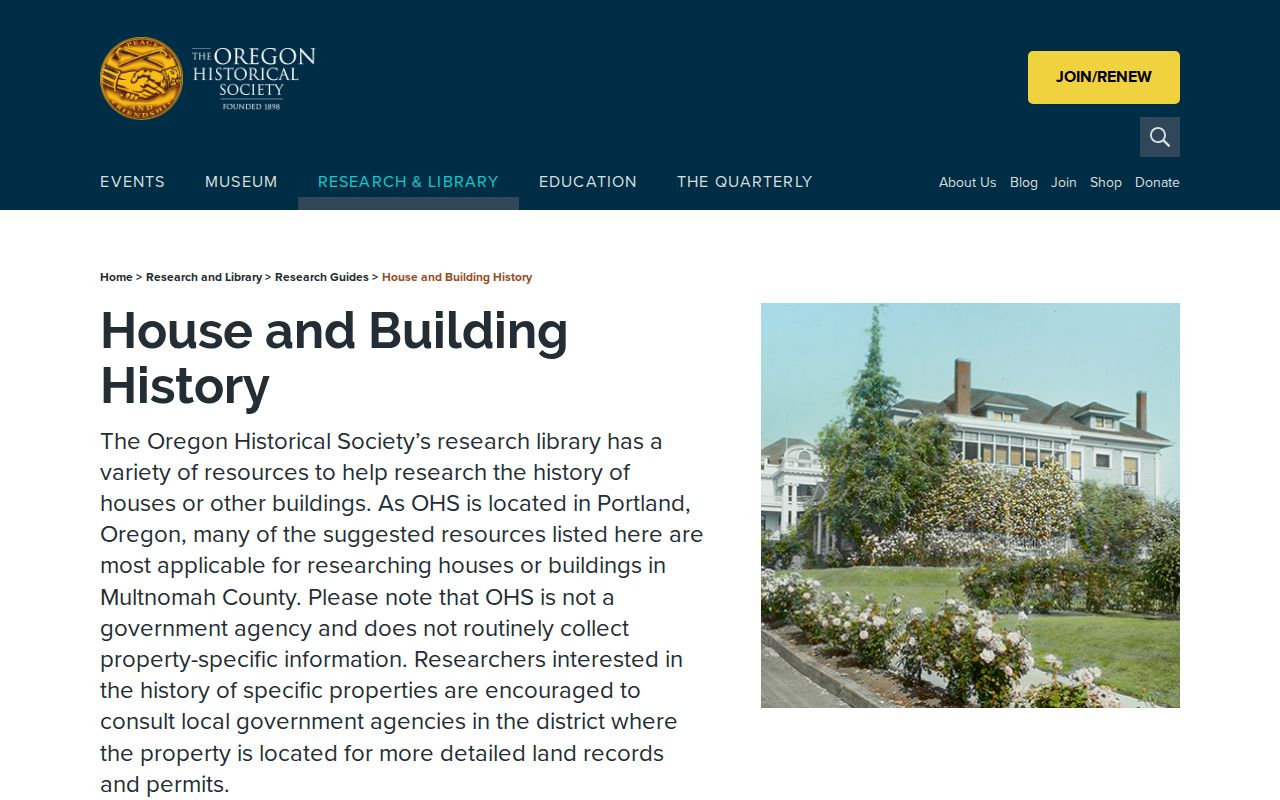
The Multnomah County city directory address trail is more reliable when the historic street form is checked against the map and atlas resources described by Oregon Historical Society.
Tracing Multnomah County City Directory Households
Build a household trail one dated record at a time. First decide whether the address was inside Portland when the building existed; the Library provides separate routes for Gresham and unincorporated territory east of I-205. Keep the current and pre-1930 address forms together. When a person or business appears, preserve the spelling, initials, street form, and the directory year before going to another source.
- Find the person in an alphabetical directory entry, or use the Street and Avenue Guide for a 1930-forward address.
- Copy the name or business exactly as printed, then locate the matching alphabetical entry for the fuller line.
- Repeat the search in the next and prior available directory years, recording each move, initials change, or business replacement.
- Pair each directory year with the nearest released federal census and with the County deed or tax series for the same period.
- If the listing stops, test historic permits, newspaper resources through the Library, the Recorder's legal description, and open State Archives indexes.
An absence does not prove that someone moved or died. Directory listing conventions, a changed spelling, a business listing, a different municipal footprint, or a missing volume can explain a gap. Treat an apparent break as a question for another dated source, not as a final answer.
Multnomah County City Directory Companions
Historical directories work best with sources that answer a different question. Portland City Archives supplies municipal maps, neighborhood photographs, building-research guides, and some scanned maps from 1866-1950. Oregon State Archives can add historical vital series when the applicable restriction period has passed. The County Recorder and property material can help compare a legal description or a dated recorded party role with the address trail.
Portland State University Special Collections holds The Viking yearbooks for 1946-47 through 1977-78, plus six later annual editions beginning 1989-90. Its access is by appointment. Used together, a yearbook and a city directory can place a person or organization in a particular period without claiming a live contact record.
For a name that needs a present-record check, use the official sources in the Multnomah County resident lookup rather than extending a historical listing beyond its printed year.
Multnomah County City Directory Geography
Portland directory coverage is not the same as county coverage. Multnomah County also includes Gresham, Troutdale, Fairview, Wood Village, Maywood Park, and unincorporated communities. The Library specifically flags Cully, Brentwood-Darlington, and the I-205-to-Gresham corridor as places where Portland and Gresham or East Suburban material may both matter.
Late-1950s to late-1970s Tscheu rural-route directories are another local exception. Their coverage is spotty and uses route boxes and maps rather than standard street numbers. Start with the address era and municipal footprint before deciding that a Portland city directory should contain an address.
Note: A Portland mailing address does not by itself establish that a historical record belongs to Portland city government.